Talc
Egyptian Talc – Second & Third Grades
Talc (hydrous magnesium silicate – Mg₃Si₄O₁₀(OH)₂) is the softest known mineral, valued for its chemical inertness, high thermal stability, and oil absorption properties. Our Egyptian talc deposits, primarily located in the Eastern Desert and Upper Egypt, yield high-quality ore associated with ultramafic rocks. We specialize in Second and Third Grade talc, offering consistent quality for industrial applications including ceramics, paints, rubber, plastics, and paper manufacturing
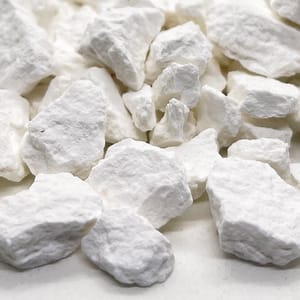
Egyptian Talc – Second & Third Grades
Talc (hydrous magnesium silicate – Mg₃Si₄O₁₀(OH)₂) is the softest known mineral, valued for its chemical inertness, high thermal stability, and oil absorption properties. Our Egyptian talc deposits, primarily located in the Eastern Desert and Upper Egypt, yield high-quality ore associated with ultramafic rocks. We specialize in Second and Third Grade talc, offering consistent quality for industrial applications including ceramics, paints, rubber, plastics, and paper manufacturing.
EGYPTIAN TALC – SECOND & THIRD GRADES
What is Talc?
Talc is a layered, hydrous magnesium silicate mineral with the chemical formula Mg₃Si₄O₁₀(OH)₂. Its theoretical composition is approximately 31.7% MgO, 63.5% SiO₂, and 4.8% H₂O. Talc is renowned for its extreme softness (hardness of 1 on the Mohs scale), making it the softest known mineral. It has a soapy feel, smooth texture, and excellent properties including chemical inertness, high thermal stability, high oil absorption, and strong covering quality.
Egyptian Talc Deposits
Egypt is rich in talc deposits, with production increasing significantly in recent years due to growing global demand . The most important talc occurrences are found in:
- The Eastern Desert: Particularly in the Wadi Allaqi district, south of Aswan, where El Nasr Mining Company has been operating since 1994 . These deposits are associated with ultramafic rocks such as serpentinites and highly sheared meta-basalts.
- Upper Egypt: Additional deposits in various locations within the Eastern Desert region.
Egyptian talc deposits can consist of up to 95% talc, though quality varies depending on the associated gangue minerals (chlorite, quartz, carbonates, and iron-bearing minerals). Structural controls, including shear zones and foliation planes, play a key role in talc concentration, with well-mapped areas achieving recovery rates above 85%.
Talc Grading System
Globally, talc is classified into grades based on purity, whiteness, and iron content. For our purposes, we focus on Second Grade and Third Grade talc, which offer excellent value for industrial applications.
Second Grade Talc
Second grade talc is characterized by:
- Whiteness: Typically ranging from 85% to 90%
- Color: Pale greenish to white.
- Purity: Good, with moderate iron content.
- Texture: Smooth with good slip properties.
Applications
- Superior-grade paper manufacturing – as filler and pitch control agent.
- Textile industry – as a lubricant and finishing agent.
- Ceramics – for medium-quality ceramic bodies and glazes.
- Paints – as an economical extender and filler.
Third Grade Talc
Third grade talc is characterized by:
- Whiteness: Typically ranging from 78% to 85%
- Color: Light greenish-grey.
- Purity: Acceptable for many industrial applications.
- Iron Content: Higher than premium grades, but still within industrial limits.
Applications
- Paint industry – as an extender and filler, providing brightness and durability while being economical.
- Rubber industry – as a reinforcing filler and processing aid, improving UV resistance and surface finish.
- Plastics industry – as a filler in polypropylene, polyethylene, and other polymers to improve stiffness, heat distortion temperature, and reduce shrinkage.
- Paper industry (inferior grades) – as a filler and pitch control agent.
- Detergent industry – as an additive.
- Roofing materials – as a filler in asphalt shingles.
- Insecticide and fungicide carriers – due to its ability to adhere to plant surfaces.
Note: Iron content (Fe₂O₃) is the primary impurity affecting whiteness and quality. Through beneficiation processes such as flotation and acid leaching, iron can be reduced to improve whiteness.
Physical Properties
- Hardness (Mohs): 1 (softest mineral)
- Specific Gravity: 2.6 – 2.8
- Feel: Slippery, soapy texture.
- Luster: Pearly to greasy.
- Cleavage: Perfect basal cleavage, producing thin, flexible flakes.
- Thermal Properties: Excellent heat resistance and insulation.
- Chemical Properties: Inert, hydrophobic, non-abrasive.
Beneficiation of Egyptian Talc
Egyptian talc often requires processing to improve its quality for industrial applications. Research has shown that using flotation with specific reagents (sodium hexametaphosphate as a depressant and oleic acid with kerosene as a collector) can significantly enhance talc quality.
Under optimal conditions (pH 11, depressant 1.0 kg/t, collector 1.2 kg/t), studies have achieved:
- Increase in SiO₂ from 54.10% to 58.96%
- Increase in MgO from 29.90% to 31.76%
- Reduction in Fe₂O₃ from 8.20% to 3.12% (after acid leaching)
- Increase in whiteness from 75.4% to 88.5%
This makes Egyptian talc suitable for a wide range of industrial applications including paints, rubber, plastics, roofing, textiles, refractories, and insecticides.
Physical Forms Available
- Lumps: For further grinding and processing.
- Powder: Various mesh sizes (100, 200, 400 mesh) for direct industrial use.
- Micronized powder: Ultra-fine grades for specialty applications.
Packaging Options
- Jumbo Bags: 1.0 – 1.5 metric tons.
- Small Bags: 25kg, 50kg polypropylene bags.
- Bulk: Available for large industrial consumers.
Quality Assurance
Each shipment is accompanied by:
- Certificate of Analysis from accredited laboratories.
- Whiteness testing.
- Particle size distribution analysis.
- Third-party inspection available upon request.
Quick Summary
Egyptian talc from our Eastern Desert deposits offers reliable quality for industrial applications. Our Second-Grade talc (whiteness 85-90%) serves superior paper, textiles, and ceramics. Our Third-Grade talc (whiteness 78-85%) is ideal for paints, rubber, plastics, and roofing materials. Both grades benefit from Egypt’s strategic location for export to global markets.
| Chemical Analysis (Typical) | ||
|---|---|---|
| Remarks | Chemical analysis | |
| Result % | Element | |
| 60- 61 | SiO2 | |
| > 0.01 | TiO2 | |
| 0.5 -1 | Al2O3 | |
| 0.4 –0.2 | Fe2O3 | |
| 0.01 | MnO | |
| 30-31 | MgO | |
| 0.5 – 1 | CaO | |
| > 0.01 | Na2O | |
| > 0.01 | K2O | |
| 0.02 | P2O5 | |
| 6.5 – 5.5 | L.O.I | |
| Mineralogical analysis | |
|---|---|
| Percentage (%) | Mineral |
| > 80.0 | Talc |
| < 12.00 | Chlorite |
| < 4.00 | Carbonate |
| Nil | Asbestos |
| Physical analysis | ||
|---|---|---|
| Remarks | Result % | Element |
| Measured on ( 325 mesh ) powder | 86.00 (min ) | Whiteness-Z |
| 0.55 | Sp . gr . | |
| 7.20 | p.H | |
Chemical analysis
| Remarks | ||
|---|---|---|
| Result % | Element | |
| 53 – 58 | SiO2 | |
| > 0.01 | TiO2 | |
| 1 – 2 | Al2O3 | |
| 0.7 – 0.5 | Fe2O3 | |
| 0.01 | MnO | |
| 28- 30 | MgO | |
| 3 – 6 | CaO | |
| > 0.01 | Na2O | |
| > 0.01 | K2O | |
| 0.04 | P2O5 | |
| 8 – 9 | L.O.I |
| Mineralogical analysis | |
|---|---|
| Remarks | |
| Asbestos – free |
| Physical analysis | ||
|---|---|---|
| Remarks | Result % | Element |
| Measured on ( 325 mesh ) powder | 83.0 ( min ) | Whiteness-Z |
| 0.55 | Sp . gr . | |
| 7.20 | pH | |