Iron Ore
Iron ore is the primary raw material for steelmaking, accounting for approximately 98% of all iron ore mined globally. Composed mainly of iron oxides such as hematite (Fe₂O₃) and magnetite (Fe₃O₄), our iron ore products range from direct-shipping ore (DSO) to high-grade concentrates up to 70% Fe. Essential for blast furnaces and direct reduction processes, we supply various grades to meet the exacting requirements of the steel industry worldwide.
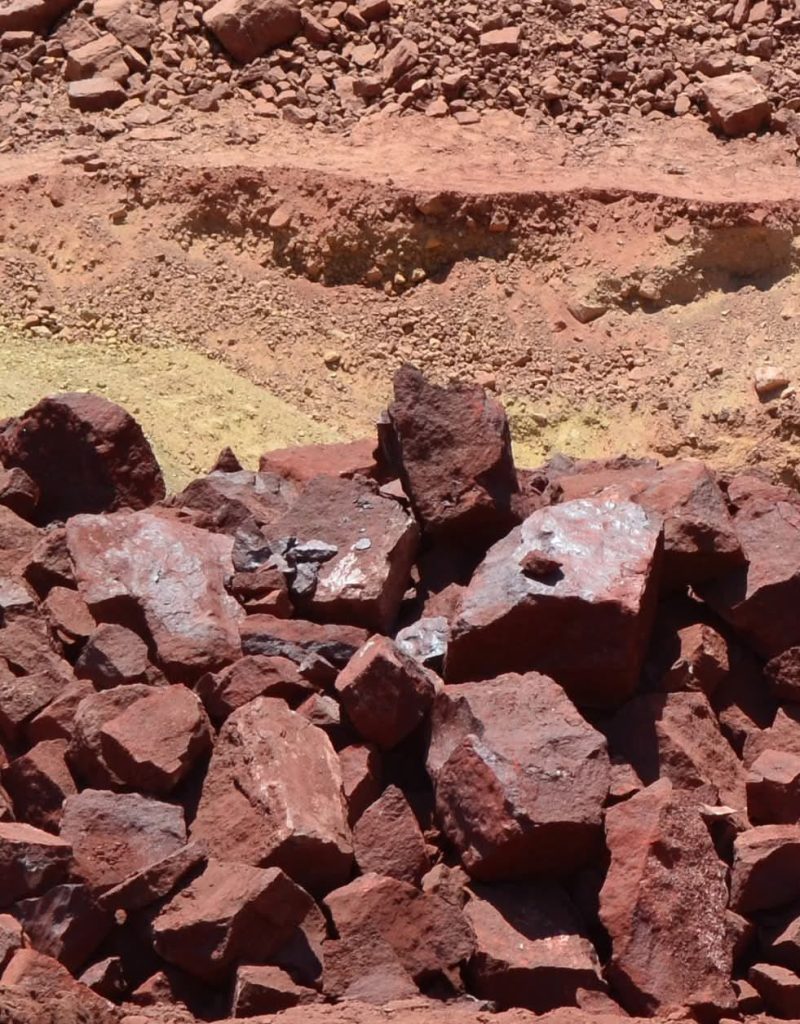
IRON ORE – COMPLETE PRODUCT RANGE
Iron ore is the foundation of the modern steel industry and the most widely used metal ore in the world. Approximately 98% of all iron ore mined is consumed in the production of iron and steel, making it a critical commodity for global infrastructure and economic development.
At Earth Raw Materials, we offer a comprehensive range of Egyptian and internationally sourced iron ore products, from direct-shipping ore to high-grade concentrates and processed materials. With our monthly supply capacity and strategic partnerships, we ensure reliable delivery to steel producers, traders, and industrial consumers worldwide.
What is Iron Ore?
Iron ore refers to rocks and minerals from which metallic iron can be economically extracted. The iron is typically found in the form of oxides, and the most important iron-bearing minerals are:
Mineral Chemical Formula Theoretical Iron Content Characteristics
– Hematite Fe₂O₃ 69.94% Reddish, most important industrial ore, easily reduced.
– Magnetite Fe₃O₄ 72.36% Black, magnetic, highest iron content.
– Goethite FeO•OH•nH₂O Up to 62.9% Yellowish-brown, hydrated oxide.
– Limonite Mixture Up to 60% Brown, mixture of hydrated oxides.
– Siderite FeCO₃ 48.2% Gray-brown, carbonate ore.
Hematite and magnetite are the two most important types for industrial ironmaking today.
Iron Ore Grades Classification
Iron ore is classified based on iron (Fe) content into three main categories:
- Grade Classification Iron Content (Fe %) Description.
- Low Grade < 55% Requires beneficiation before use.
- Medium Grade 55% – 62% Suitable for sintering and pelletizing.
- High Grade 62% – 64% Direct-shipping ore (DSO), suitable for blast furnaces.
- Very High Grade 65% – 67% Premium products for pelletizing.
- Direct Reduction Grade 67% – 69%+ For DRI/EAF steelmaking, lower emissions.
Note: Pure magnetite contains up to 72.4% Fe theoretically, but commercially available ores typically max out around 68-69% Fe.
Grade Range & Specifications
We offer a comprehensive range of iron ore products to meet various steelmaking requirements:
Example specifications from industry:
- Blast furnace iron ore: 40% Fe (lower grade), 10-70mm size.
- Sintering iron ore: 52% Fe, 0-10mm size.
- High-grade concentrate: 69.5%+ Fe, SiO₂ <3%, particles <0.045mm.
Iron Ore Product Forms
Iron ore is available in several physical forms depending on processing and end-use requirements:
Applications by Industry
1. STEELMAKING – BLAST FURNACE ROUTE
The traditional and most common steelmaking route:
- Input Material Fe % Process Output.
- Lump ore, sinter, pellets 58-65% Blast furnace Pig iron / Hot metal.
- Pig iron 94-96% Basic oxygen furnace Crude steel
Integrated steel plants typically use medium to high-grade iron ore (62-65% Fe)
2. SINTERING
Sintering agglomerates fine iron ore materials into a porous, lumpy product for blast furnace use:
- Feed: Iron ore fines, concentrates, fluxes, coke breeze.
- Process: Combustion at ~1400°C fuses particles.
- Product: Sinter (50-62% Fe)
3. PELLETIZING
Pelletizing converts fine concentrates into uniform spheres:
- Feed: Iron ore concentrate (65-69% Fe)
- Process: Balling and induration (heat hardening)
- Blast furnace pellets (62-65% Fe)
- DR-grade pellets (66-68%+ Fe)
4. NON-STEEL APPLICATIONS
Small amounts of iron ore (approximately 2%) are used for non-steel applications including:
- Ballast.
- Cement clinker production.
- Crushed road base material.
- Iron oxide pigments.
- Heavy media separation.
- Specialty applications.
Note: Actual analysis varies by deposit and processing. Full Certificate of Analysis provided with each shipment.
Quality Assurance
Every shipment is accompanied by:
- Pre-shipment analysis from accredited laboratories.
- Third-party inspection (SGS, Bureau Veritas, Alex Stewart) available upon request.
- Draft survey at loading port.
- Moisture content certification (critical for concentrates)
- Complete documentation package (Certificate of Origin, Bill of Lading, Commercial Invoice, Packing List)
Egyptian Iron Ore
Egypt has significant iron ore deposits, particularly in:
• El-Gedida area (Bahariya Oasis) – Hematite and goethite ores
• Aswan region – Oolitic hematite deposits
Egyptian iron ore typically ranges from 45-55% Fe and has been used historically in the Egyptian steel industry at Helwan. With modern beneficiation techniques, these ores can be upgraded for various applications.
| Chemical Analysis (Typical Specifications) | ||
|---|---|---|
| Remarks | Chemical analysis | |
| Result % | Element | |
| 1.30-8.00 | SiO2 | |
| 50.0-65.0 | Fe ( total) | |
| 0.20-2.10 | CaO | |
| 5.00-6.00 | L.O.I | |
| 0.20-13.00 | FeO | |
| 70.00-91.0 | Fe2O3 | |
| 0.50-1.50 | SO3 | |