Manganese
Egyptian Manganese
Manganese is a critical industrial mineral essential for steelmaking, accounting for approximately 90% of global consumption. Egypt has significant manganese deposits primarily located in two main regions: Um Bogma in southwestern Sinai (the country’s largest producing area) and Gabal Elba in the southern Eastern Desert. Our manganese ores range from 28% to over 40% Mn, suitable for various metallurgical and chemical applications.
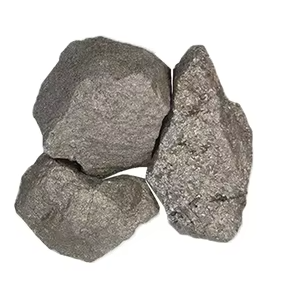
EGYPTIAN MANGANESE
What is Manganese?
Manganese (Mn) is a hard, brittle, gray-white metal, atomic number 25, essential in steel production as a desulfurizer and deoxidizer. Approximately 90% of all manganese is consumed by the steel industry, where it improves strength, hardness, and wear resistance. It has no satisfactory substitute in its major applications.
Egyptian Deposits
Egypt’s manganese resources are concentrated in two primary regions:
1. Um Bogma Area (Southwestern Sinai): Egypt’s most important manganese-producing region, located in the Um Bogma Formation of Carboniferous age. The manganese ores are associated with the Ras Samra Member and occur in several forms including pyrolusite, haussmannite, manganite, and psilomelane. Major occurrences include:
• Wadi El-Sahu and Gabal Um Hamd areas.
• Multiple mine sites exploited since the early 20th century.
2. Gabal Elba Area (Southern Eastern Desert): Located near the Red Sea coast, with manganese deposits in twelve distinct areas including Wadi Bashoya, Oshbia, Gabal Toyo, El-Hebal, Mateet, Blownay, Adeeb, Sarara, Sirmatai, Aqilahuq, Eikwan, and Wadi Ajway. These deposits occur in two types:
• Massive manganese ore type.
• Manganiferous sandstone ore type.
Manganese Ore Grades
Based on geological studies of Egyptian deposits, manganese ores are classified by Mn content:
• High-Mn Grade: >40% Mn (up to 63.4% MnO, equivalent to ~49% Mn). These ores consist mainly of pyrolusite and hausmannite with minor helvite and hematite. They are epigenetic in origin, related to hydrothermal activity associated with Tertiary basalt flows.
• Medium-Mn Grade: 30-40% Mn (approximately 4.87-2.58 Mn/Fe ratio). These ores are syngenetic sedimentary precipitations and are preferable for obtaining significant economic effect in ferromanganese alloy production.
• Low-Mn Grade: 20-30% Mn (approximately 1.51-0.30 Mn/Fe ratio). These require beneficiation to achieve desired quality for industrial applications.
Commercial offerings from Egyptian suppliers typically range from 28% to 35% Mn, with some suppliers reporting Mn 46% grades.
Typical Composition
Egyptian manganese ores commonly contain:
• Mn: 28-46% (varying by deposit and grade)
• Fe: 25-30% in low-Mn types (often described as “low Mn, high Fe”)
• SiO₂: ~2.5%
• Al₂O₃: ~0.6%
• TiO₂: ~0.06%
• Associated minerals: Pyrolusite (MnO₂), hausmannite (Mn₃O₄), manganite (MnO(OH)), hematite (Fe₂O₃), goethite (FeO(OH)), and quartz (SiO₂)
Applications and Industrial Uses
1. Steel Industry (Primary Use): Approximately 90% of manganese is consumed in steelmaking:
• Ferromanganese alloys: Essential component for all steel grades.
• Desulfurizer and deoxidizer: Removes impurities during steel production.
• Railway manufacturing: Manganese-iron alloy gives hardness and wear resistance.
2. Battery Industry: Used in dry cell batteries (Zn-MnO₂)
3. Chemical Industry:
• Manganese sulfate as fungicide.
• Potassium permanganate for water treatment.
• Manganese compounds for chemical processing.
4. Paints and Coatings: Egyptian manganese ore has been successfully used in heat-resistant anticorrosive paint formulations, providing protection up to 450°C when combined with silicon resin and melamine additives.
5. Refractory Industry: Manganese compounds used in specialized refractory applications.
6. Construction Materials: As additive in building materials.
7. Agriculture: Manganese is an essential micronutrient for plants, used in fertilizers to correct manganese deficiency in soils.
8. Ferromanganese Alloy Production: Egyptian manganese ores (particularly high and medium grades) are suitable for producing ferromanganese alloys, though low-grade ores require beneficiation.
Origin and Genesis
Studies indicate two main origins for Egyptian manganese:
• Hydrothermal origin: High-grade ores formed from epigenetic hydrothermal solutions penetrating bedding planes, possibly related to Tertiary volcanic activity. Geochemical plots (Co+Ni vs. As+Cu+Mo+Pb+V+Zn) support hydrothermal origin.
• Sedimentary origin: Medium and low-grade ores formed by syngenetic sedimentary precipitation, with some showing colloform textures and oolitic structures indicating redeposition.
Processing and Beneficiation
Egyptian manganese ores, particularly from Um Bogma, are amenable to upgrading. Beneficiation studies using:
• Gravity separation.
• Magnetic separation.
• Flotation techniques.
Low-Mn ores (Mn/Fe <2) require processing to meet the quality demands of the Egyptian market.
Shipping Ports
Major Egyptian ports for manganese exports include:
- Suez (Gulf of Suez)
- Abu Zenima (Sinai, near mining areas)
- Adabiya (Gulf of Suez)
- Abo Ghosoun (Red Sea, for Eastern Desert deposits)
Export Availability
Egyptian suppliers offer manganese ore with:
- Size: 10mm to 100mm (typical)
- Capacity: Up to 15,000 tons per month reported by some suppliers.
- Price indications: Historically around $80-100/ton FOB.
Physical Forms Available
- Lumps: Run-of-mine, crushed and sized (10-100mm typical)
- Concentrates: Beneficiated products for specific applications.
- Powder: For chemical and battery applications.
Packaging Options
- Jumbo Bags: 1.0 – 1.5 metric tons.
- Bulk: Direct loading into vessel holds for large industrial consumers.
Quality Assurance
Each shipment is accompanied by:
- Certificate of Analysis from accredited laboratories.
- Mn content verification.
- Fe, SiO₂, Al₂O₃ analysis.
- Third-party inspection available upon request.
Quick Summary:
Egyptian manganese is found in two main regions: Um Bogma in Sinai (our largest producing area) and Gabal Elba in the Eastern Desert. Our ores range from 28% to over 40% Mn, with high-grade material suitable for ferromanganese alloy production. The steel industry consumes most of the world’s manganese, and our Egyptian ores serve this critical market along with battery, chemical, and paint applications. With multiple export ports including Suez, Abu Zenima, and Abo Ghosoun, we offer reliable supply to global markets.
| Chemical Analysis (Typical Specifications) | ||
|---|---|---|
| Remarks | Chemical analysis | |
| Result % | Element | |
| 63.0-55.0 | MnO2 | |
| 5.00-8.00 | SiO2 | |
| 7.00-9.00 | Fe2O3 | |
| 6.00-7.00 | CaO | |
| 3.00-35.0 | MgO | |
| 0.40-1.00 | Na2O | |
| 0.10-0.30 | K2O | |
| 35.0-40.0 | Mn | |
| 45.0-51.0 | MnO | |
| 10.0-17.0 | L.O.I | |