Fluorspar (Fluorite)
Fluorspar (calcium fluoride – CaF₂) is Egypt’s strategic industrial mineral, with significant deposits in the Eastern Desert. As a critical raw material for steelmaking flux, hydrofluoric acid production, and aluminum smelting, Egyptian fluorspar serves both metallurgical and chemical industries. Our product range includes various grades suitable for local and international markets, with ongoing beneficiation research to enhance purity for high-value applications.
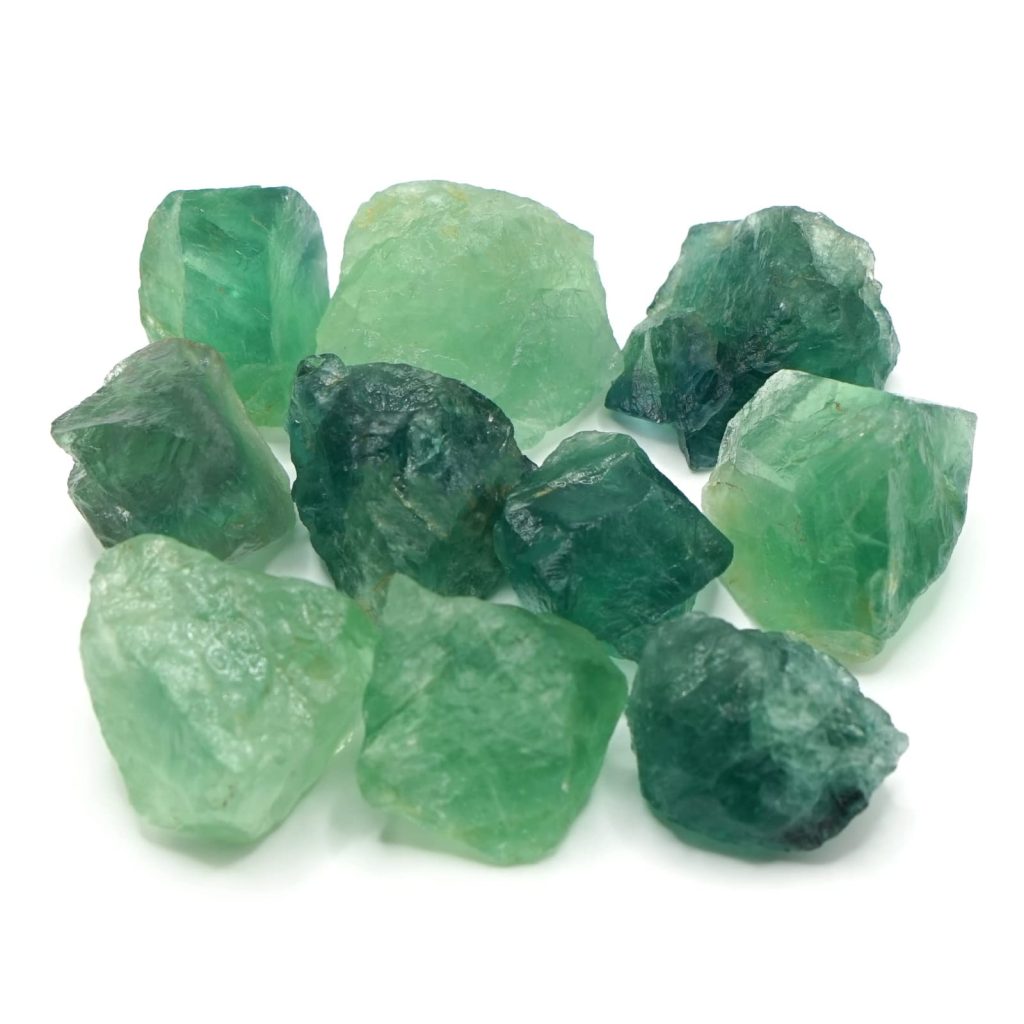
EGYPTIAN FLUORSPAR (FLUORITE)
What is Fluorspar?
Fluorspar (the mineral fluorite) is composed primarily of calcium fluoride (CaF₂). In its pure form, it theoretically contains 51.1% calcium and 48.9% fluorine. It is considered a critical mineral globally – both the United States and European Union classify it as a strategic raw material due to its essential role in modern industries.
Occurrence in Egypt:
Fluorspar is found in Egypt mainly in the Eastern Desert, where scientific studies have confirmed deposits in several locations. Advanced analyses using techniques such as WDXRF and XRD on samples from Egyptian mines show that the ore consists mainly of fluorite along with silicates and other elements in varying proportions. This means Egyptian fluorspar requires processing and beneficiation to reach the commercial grades demanded internationally.
Commercial Grades:
Worldwide, fluorspar is classified into three main grades based on CaF₂ purity:
- Metallurgical Grade (Metspar): Contains 60% to 85% fluorspar. Used primarily as a flux in iron and steelmaking to remove impurities such as sulfur and phosphorus from molten metal and improve slag fluidity. Also used in aluminum smelting and ceramics.
- Ceramic Grade: Contains 85% to 96% fluorspar. Used in specialty glass, ceramics, and enamel production. Iron content (Fe₂O₃) must typically not exceed 0.12% to avoid affecting the final product’s color.
- Acid Grade (Acidspar): Contains over 97% fluorspar. This is the highest purity and value grade, used primarily to produce hydrofluoric acid (HF). HF is the essential raw material for manufacturing fluorocarbons (refrigerants), polytetrafluoroethylene (Teflon), lithium-ion battery electrolytes (LiPF6), and uranium fuel for nuclear reactors (UF6).
Main Applications:
- Iron & Steel Industry: Metallurgical grade is used as a flux to improve furnace efficiency and remove impurities. Approximately 9 to 27 kg of fluorspar is used per ton of steel produced.
- Chemical Industry: Acid grade is used to produce hydrofluoric acid, which then goes into refrigerants, insulation, pharmaceuticals, and heat-resistant plastics.
- Aluminum Industry: Aluminum fluoride (AlF₃), derived from fluorspar, is added to the electrolytic production of aluminum.
- Electric Vehicle Batteries: Fluorspar is essential for producing lithium-ion battery electrolytes (LiPF6), making it a critical mineral for the clean energy transition.
Processing & Beneficiation:
Because Egyptian fluorspar contains impurities such as silicates, it requires processing to upgrade its purity. Current research indicates the use of flotation technology to enhance the quality of Egyptian fluorspar. This technique separates fluorite from impurities, producing high-purity concentrates suitable for acid-grade applications.
Quick Summary:
Egyptian fluorspar is found in the Eastern Desert and requires beneficiation to reach international grades. We offer various grades based on CaF₂ percentage and impurity levels, using modern processing techniques to improve quality. This mineral is in high demand globally for steel, aluminum, chemical industries, and even electric vehicle batteries.
| Chemical Analysis (Typical Specifications) | ||
|---|---|---|
| Remarks | Chemical analysis | |
| Result % | Element | |
| 87.0-92.3 | CaF2 | |
| 1.30 | SiO2 | |
| 1.00 | CaCO3 | |
| 42.30 | F | |