Ilmenite
Egyptian Ilmenite
Ilmenite (FeTiO₃) is Egypt’s premier titanium ore, extracted from the abundant black sand deposits along the Mediterranean coast from Rashid to Rafah, as well as from stream sediments in the Eastern Desert and Red Sea region. As the most important source of titanium dioxide (TiO₂), Egyptian ilmenite serves critical industries including paints, aerospace, plastics, and welding. With the Egyptian Black Sand Company’s modern processing facilities, including the world-class complex in Burullus, Egypt has become a significant producer of high-quality ilmenite concentrate.
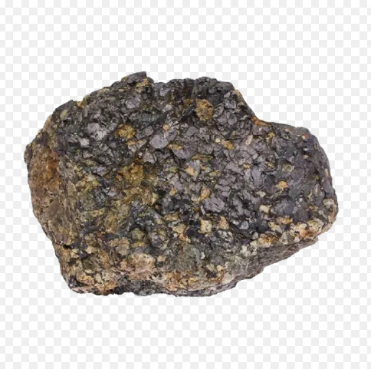
EGYPTIAN ILMENITE
What is Ilmenite?
Ilmenite is a titanium-iron oxide mineral with the idealized formula FeTiO₃. In its pure form, it theoretically contains 36.8% iron and 31.6% titanium. It is a weakly magnetic, black to steel-gray solid with a submetallic luster, hardness of 5-6 on the Mohs scale, and specific gravity of approximately 4.7. Ilmenite is distinguished from hematite by its black streak and from magnetite by its weaker magnetic response.
Egyptian Deposits: Black Sand Wealth
Egypt possesses vast deposits of ilmenite, primarily concentrated in two main regions:
1. Mediterranean Black Sand Deposits: Ilmenite is the most abundant economic mineral in Egypt’s black sands, which stretch approximately 400 kilometers along the Mediterranean coast from Rashid (Rosetta) in the west to Rafah in the east. These sands are formed as the Nile River carries minerals from the heart of Africa to the Mediterranean Sea, where currents and waves concentrate them into black sand dunes. Egypt’s geological reserves of black sand are estimated at over 1.3 billion cubic meters, containing approximately 285 million tons of heavy minerals, with ilmenite being the primary component. Key deposits include:
• Rashid area: 600 million cubic meters of black sand reserves
• Damietta area: 300 million cubic meters
• Arish-Rafah area: 200 million cubic meters
2. Eastern Desert and Red Sea Deposits: Recent studies have confirmed significant ilmenite occurrences in the Quaternary stream sediments of the Diit area on the southern Red Sea coast. These deposits cover approximately 450 km² and contain considerable amounts of placer ilmenite along with magnetite, zircon, and other economic minerals. This represents a promising new source for future ilmenite production.
Egyptian Production Capabilities
The Egyptian Black Sand Company (EBSC), established in 2016, operates world-class processing facilities that position Egypt as a major ilmenite producer:
• Burullus Complex (Kafr El-Sheikh): Inaugurated in October 2022, this facility is the first of its kind globally, featuring the most advanced mining equipment. The complex includes:
– A dredger with production capacity of 2,500 tons per hour.
– A floating concentration factory processing 158 tons per hour.
– An ilmenite plant with annual production capacity of 298,000 tons.
– Additional plants for rutile (11,000 t/y), zircon (25,000 t/y), garnet (23,000 t/y), and monazite.
– Rashid and Other Sites: Extraction and separation units operate in Rashid, Damietta port sediment basins, and Lake Manzala, with multiple floating and fixed extraction units. The Rashid area alone has an annual output capacity of 31,000 tons from its first production phase.
Applications and Industrial Uses
Egyptian ilmenite serves a wide range of strategic industries:
1- Titanium Dioxide Production (Primary Use): Approximately 99% of ilmenite is processed into titanium dioxide (TiO₂), the world’s whitest and brightest pigment. TiO₂ is essential for:
– Paints and coatings: Providing opacity, brightness, and durability.
– Plastics: Improving whiteness and UV resistance.
– Paper: Enhancing brightness and opacity.
– Cosmetics: Used in sunscreens and makeup products.
– Food and pharmaceuticals: As a coloring agent.
2- Aerospace and Defense: Ilmenite-derived titanium is used in manufacturing:
– Aircraft structures and components.
– Rockets and spacecraft.
– Submarines and naval vessels.
– High-performance alloys.
3- Welding Electrodes: Ilmenite is supplied to welding electrode manufacturers as a flux and coating material.
4- Titanium Metal Production: For aerospace, medical implants, and high-performance automotive applications.
5- Steel and Alloy Manufacturing: As a flux in blast furnaces and for producing ferro-titanium alloys.
6- Other Applications:
– Sandblasting and surface preparation.
– Ceramics production.
– Water purification media.
– Electronics and semiconductors.
Typical Composition
Egyptian ilmenite from black sand deposits typically contains:
- TiO₂ content: Generally ranging from 40-48% in raw concentrates, upgradable through processing.
- Iron oxides: As FeO and Fe₂O₃
- Minor elements: Magnesium, manganese, and trace vanadium.
Through beneficiation processes including magnetic separation, flotation, and smelting, ilmenite can be upgraded to:
- High-grade ilmenite: 50-55% TiO₂
- Titanium slag: 75-85% TiO₂ (via smelting)
- Synthetic rutile: 88-95% TiO₂ (via chemical processing)
Processing Methods
Egyptian ilmenite is processed using modern technologies:
• Gravity separation: Initial concentration from black sand.
• Magnetic separation: High-intensity magnetic separation at 1 ampere current separates ilmenite from other minerals.
• Electrostatic separation: For final purification.
• Flotation: For fine particle recovery.
For titanium dioxide production, two main processes are used globally, and Egyptian ilmenite is suitable for both:
– Sulfate process: Suitable for ilmenite with <55% TiO₂
– Chloride process: Requires higher-grade feedstocks or upgraded ilmenite.
Global Market Context
• The global ilmenite market was valued at approximately USD 11.28 billion in 2025 and is expected to reach USD 19.27 billion by 2035, growing at a CAGR of 5.5%
• Titanium dioxide production accounts for over 99% of ilmenite consumption.
• Asia Pacific dominates with 29% market share, driven by expanding paint, plastics, and construction industries.
• Major global producers include Australia, South Africa, Canada, Mozambique, India, and now Egypt.
Egypt’s Strategic Advantage
Egypt’s ilmenite production offers several advantages:
• Vast reserves: Among the largest black sand deposits globally.
• Strategic location: Access to Mediterranean and Red Sea shipping routes.
• Modern facilities: State-of-the-art processing technology at Burullus.
• Government support: Partnership between Egyptian Black Sand Company, Nuclear Materials Authority, and National Service Projects Organization.
• Export potential: Surplus production available for international markets.
Quality Assurance
Each shipment is accompanied by:
- Certificate of Analysis from accredited laboratories.
- TiO₂ content verification.
- Particle size distribution analysis.
- Moisture content certification.
- Third-party inspection available upon request.
Packaging Options
- Bulk: Direct loading into vessel holds for large industrial consumers.
- Jumbo Bags: 1.0 – 1.5 metric tons.
- Small Bags: 25kg, 50kg for specialty applications.
Quick Summary:
Egyptian ilmenite is extracted from our world-class black sand deposits along the Mediterranean coast, with estimated reserves exceeding 1.3 billion cubic meters. Our state-of-the-art processing complex in Burullus produces 298,000 tons annually of high-quality ilmenite concentrate, serving the global titanium dioxide industry. Egyptian ilmenite is ideal for paint manufacturers, aerospace companies, welding electrode producers, and titanium metal processors, backed by Egypt’s strategic location for efficient export to European, Asian, and African markets.
| Size Analysis | Chemical analysis | ||
|---|---|---|---|
| Result % | Size- mm | Result % | Element |
| 2.5 | +40 | 34.00 – 37.00 | TiO2 |
| 92 | 10 – 40 | 3.00 – 6.00 | SiO2 |
| 5.5 | -10 | 4.00 – 6.00 | Al2O3 |
| 1.00 – 2.00 | CaO | ||
| 2.00 – 3.00 | MgO | ||
| 0.50-1.00 | L.O.I | ||
| 34.00 – 38.00 | Fe total | ||
| 68.00 – 72.00 | Fe + TiO2 | ||