Magnesite
Egyptian Magnesite
Magnesite (magnesium carbonate – MgCO₃) is Egypt’s strategic source of magnesia (MgO), with enormous untapped deposits in the Eastern Desert, particularly at Wadi Barramiya where reserves exceed 30.9 million tons. As a critical raw material for refractory bricks, cement kiln linings, and magnesium compounds, Egyptian magnesite serves high-temperature industries. Our magnesite is sourced from El-Nasr Company for Mining at Sebaiya-East Edfu-Aswan, with proven suitability for producing advanced refractory composites.
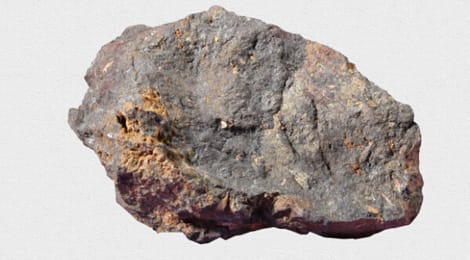
EGYPTIAN MAGNESITE
What is Magnesite?
Magnesite is a magnesium carbonate mineral with the chemical formula MgCO₃. In its pure form, it theoretically contains 47.8% MgO and 52.2% CO₂. When calcined, it produces magnesia (MgO), which has an extremely high melting point of 2800°C and excellent resistance to basic slags and fluxes. These properties make it indispensable for high-temperature industrial applications.
Egyptian Deposits
Egypt possesses significant magnesite resources in two main contexts:
– Wadi Barramiya Area (Eastern Desert): Enormous quantities of talc-magnesite rocks are distributed in the Wadi Barramiya area, with intimate spatial and genetic association with ophiolitic serpentinites. These deposits represent an important potential source of magnesia for strategic industries. Reserve estimations using remote sensing and GIS techniques have accomplished mapping of these deposits, which exceed 30.9 million tons.
The deposits occur in two settings:
• Along major faults cutting serpentinite slices (magnesite-rich)
• At thrust contacts between serpentinites and siliceous country rocks (talc-rich)
– Sebaiya-East Edfu-Aswan: Crystalline magnesite rocks containing small amounts of dolomite are supplied by El-Nasr Company for Mining. These deposits are environmentally safe and suitable for producing low-cost magnesia-based refractories.
Industrial Applications
Egyptian magnesite serves critical industries, particularly refractories:
1. Refractory Industry (Primary Use): Magnesite is calcined to produce magnesia (MgO), the main component of basic refractory bricks used in:
• Rotary Cement Kilns (RCK): Egyptian magnesite has been successfully processed with zirconia to produce MgO-CaZrO₃ (M-CZ) composite clinker for refractory brick manufacturing. With 9.8 wt% zirconia addition, these composites achieved excellent densification, homogeneous microstructure, and maximum cold crushing strength of 174.9 MPa, making them strongly nominated for cement kiln linings.
• Steelmaking Furnaces: Basic oxygen furnaces and electric arc furnaces.
• Glass and Metal Industries: High-temperature process vessels.
2. Grinding Stones and Abrasives: Egyptian magnesite has been used to prepare SiC-magnesium oxychloride (MOC) paste composites for grinding stone applications.
3. Magnesium Compounds Production:
• Magnesium oxide (caustic calcined magnesia)
• Dead-burned magnesia (periclase) for refractories.
• Magnesium chemicals and pharmaceuticals.
4. Environmental Applications:
• Flue gas desulfurization.
• Waste water treatment.
• Soil conditioning.
5. Construction Materials:
• Magnesium oxychloride cement (Sorel cement)
• Fire-resistant boards and panels.
Processing and Beneficiation
Egyptian magnesite requires thermal processing to unlock its value:
• Calcination at different temperatures produces various grades of magnesia:
– Caustic calcined magnesia (700-1000°C): Chemically reactive, used for animal feed, fertilizers, water treatment.
– Dead-burned magnesia (1500-2000°C): Dense, chemically inert, used for refractory bricks.
• Composite Manufacturing: Research has successfully produced MgO-CaZrO₃ composites by adding 4.8-24.8 wt% zirconia to Egyptian magnesite, firing at 1550°C for 2 hours. These composites show excellent refractory properties without free CaO.
• Thermal Behavior: Thermogravimetric analysis of Egyptian magnesite shows total weight loss of 46.92% from room temperature to 1400°C, with three endothermic peaks at 113°C, 560°C, and 692°C corresponding to dehydration and decarbonation reactions.
Quality Parameters
• MgO content: Determines refractoriness and value.
• CaO content: Present as dolomite impurity in some deposits.
• Fe₂O₃ and Al₂O₃: Minor impurities affecting color and properties.
• Loss on Ignition (LOI): Approximately 46-52% due to CO₂ release.
Refractory Properties
Magnesia-based materials from Egyptian magnesite offer:
• Extremely high melting point (2800°C)
• Excellent resistance to basic slags and fluxes.
• Good thermal shock resistance when combined with modifiers like zirconia.
• No generation of dangerous wastes (environmentally safe alternative to magnesia-chrome bricks)
• High hot mechanical strength.
• Excellent corrosion resistance against alkalis and basic slags.
Physical Forms Available
• Raw magnesite lumps: For calcination and processing.
• Caustic calcined magnesia: Partially calcined for chemical applications.
• Dead-burned magnesia: Fully calcined for refractory manufacturing.
• Magnesia-based composite clinker: Pre-reacted for brick production.
• Ground powders: Various mesh sizes for specialized applications.
Packaging Options
- Jumbo Bags: 1.0 – 1.5 metric tons.
- Small Bags: 25kg, 50kg for specialty applications.
- Bulk: Available for large industrial consumers
Quality Assurance
Each shipment is accompanied by:
• Certificate of Analysis from accredited laboratories.
• MgO content verification.
• Loss on ignition testing.
• Particle size distribution.
• Third-party inspection available upon request.
Quick Summary:
Egyptian magnesite is found in vast quantities in the Eastern Desert, particularly at Wadi Barramiya (30.9+ million tons) and Aswan. Our magnesite is ideal for producing high-quality magnesia refractories, with proven performance in rotary cement kiln linings when processed with zirconia additives. The extremely high melting point of magnesia (2800°C) and excellent slag resistance make Egyptian magnesite a strategic choice for steel, cement, and glass industries. With modern processing facilities and Egypt’s strategic location, we offer reliable supply to global markets.
| Chemical Analysis (Typical) | ||
|---|---|---|
| Remarks | Chemical analysis | |
| Result % | Element | |
| 0.50-3.50 | SiO2 | |
| 0.50-1.00 | Al2O3 | |
| 0.60 Max | Fe2O3 | |
| 6.00 – 8.00 | CaO | |
| 40.0-42.0 | MgO | |
| 0.50 Max | Na2O | |
| 0.10 Max | K2O | |
| 48.0-52.0 | L.O.I | |